Big Oil, Big Irresponsibility
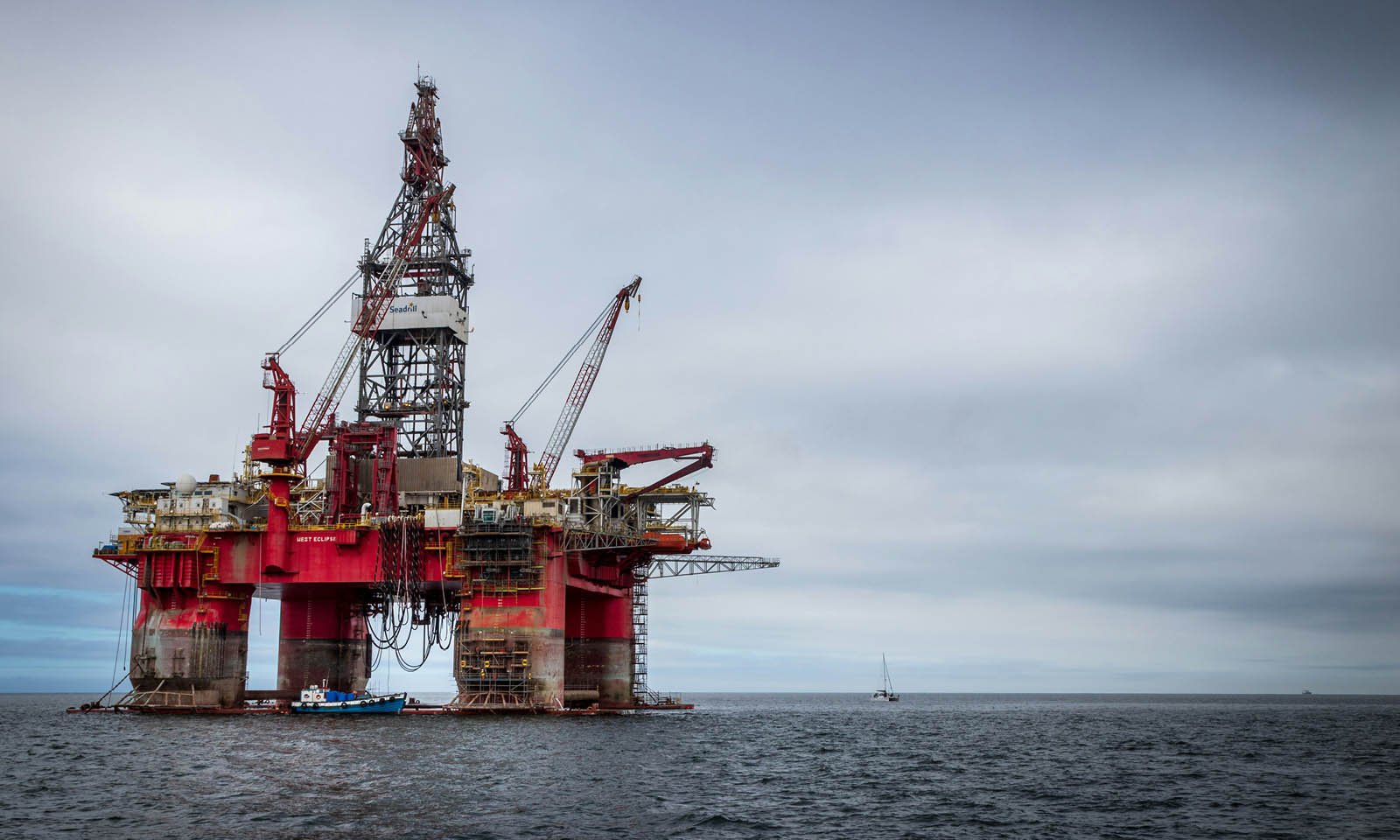
In this advertisement from Chevron, a supermajor oil company, fossil fuel energy is presented as essential to human progress. It is true that fossil fuels, freely available from nature, have provided humans with an unmatched source of energy that powered modernity—industrialization, transportation, urbanization, mass production of goods, and the ever-intensifying global movement of people and goods. The Industrial Revolution ran on coal, which fueled steam engines and, later, electricity-generating power plants. With the invention of the internal combustion engine, oil became the lifeblood of modern economies.
Oil corporations were key architects of this fossil-based modernity. They played a decisive role in shaping the economy of fossil fuel extraction, production, and distribution, as well as the politics and culture surrounding fossil fuels. From the outset, these companies pursued a business model characterized by aggressive expansion and political influence. Standard Oil, founded by John D. Rockefeller in 1870, began as a small refinery partnership in Cleveland. It quickly gained control of the U.S. oil sector through ruthless business practices: strategic buyouts of rivals, secret railroad rebates that secured lower shipping costs than competitors, predatory pricing that drove prices below cost, and vertical integration across the entire chain—from wells and refining to transport, distribution, and the production of kerosene lamps.
The 1911 anti-monopoly breakup of Standard Oil produced 34 independent “baby Standard” companies, several of which later developed into major firms such as ExxonMobil, Chevron, and Amoco. Together with BP and Royal Dutch Shell, they formed the core of the “Seven Sisters” that dominated the global oil industry until the 1970s. Their influence extended far beyond supply. They actively engineered demand by promoting car-centered mobility, suburban expansion, and petrochemical products. By reshaping transport, land use, and consumption around oil, these companies locked societies into economic models that make fossil fuel use the default.
Climate Responsibility of Big Oil
Today’s “Big Oil”—a term analogous to Big Tech or Big Pharma—refers to the largest investor-owned oil and gas companies, including ExxonMobil, Chevron, Royal Dutch Shell, BP, and TotalEnergies. Alongside major state-owned firms such as Saudi Aramco, Gazprom, Rosneft, Abu Dhabi National Oil Company, Kuwait Petroleum Corporation, and Petrobras, they dominate global oil and gas production and control fossil-fuel supply chains from exploration and extraction to refining, transport, and international markets. Their scale is immense. If Big Oil existed as a country, it would, according to Time magazine, be the eighth-richest country in the world, between France and Italy. This economic weight translates into substantial political influence exercised through close ties with governments, lobbying, regulatory capture, and strategic litigation, enabling them not only to shape energy markets but also to influence broader economic and environmental policies.
The capacity to influence is very important because Big Oil produces a large share of global emissions and bears considerable responsibility for climate change. Research by climate accountability scholar Richard Heede, founder of the Climate Accountability Institute, has been central in reframing climate change as a problem linked to identifiable corporate actors and institutional structures. His Carbon Majors database quantifies the contribution of major fossil fuel producers to atmospheric CO₂ concentrations, global temperature rise, sea level increase, and related human rights impacts.
Historically, investor-owned companies account for approximately one-third of all emissions tracked by the database (440 GtCO₂e), with Chevron, ExxonMobil, and BP as the three largest contributors. State-owned companies are linked to another third, led by Saudi Aramco, Gazprom, and the National Iranian Oil Company. Overall, from 1854 to 2010, just ninety fossil-fuel-producing companies were responsible for 63 percent of all industrial CO₂ and methane emissions, the principal drivers of climate change. Notably, half of these emissions occurred after 1988, by which time these companies were already aware that the continued combustion of fossil fuels would have severe climatic consequences.
Decades of Denying and Obstructing
Big Oil was among the first to understand the link between fossil fuel combustion and global warming. Owing to their financial resources and early investment in scientific research, oil companies were aware of climate science at an early stage. Findings by the Climate Investigations Center and other researchers show that major companies were alerted to the warming effects of fossil fuels as early as 1954. Despite this early knowledge, several fossil fuel corporations went on to fund campaigns that stressed scientific uncertainty, questioned the reliability of climate models, and downplayed the risks of climate change.
The extent to which these corporations contributed to the deliberate manufacture of doubt and thereby delayed climate action is perhaps the most controversial aspect of Big Oil’s role in the climate crisis. Even as scientific consensus strengthened, companies financed think tanks and lobby groups, supported contrarian scientists, and amplified uncertainty in public debate. In Merchants of Doubt, Naomi Oreskes documents the role of prominent contrarian figures such as Fred Singer and Fred Seitz. Both became critics of mainstream climate science and acted as industry-linked advocates, helping to create the impression of ongoing scientific disagreement. This strategy of “manufacturing doubt” undermined public trust in science and weakened public support for government regulation of greenhouse gas emissions.
A key example is ExxonMobil, whose unethical practices are well documented. The company funded high-quality internal climate research from the 1970s onward. Its own scientists warned that continued fossil fuel use would lead to significant global warming with potentially catastrophic consequences. Yet by the late 1980s and 1990s, ExxonMobil shifted strategy and began funding organizations such as the Competitive Enterprise Institute and the Heartland Institute, which publicly questioned climate science and emphasized uncertainty. The company also ran advertorials in major newspapers, including The New York Times, that highlighted scientific uncertainty and downplayed the urgency of climate action. These efforts formed part of a broader, coordinated campaign in which major fossil fuel companies lobbied against international climate agreements (for example, the Kyoto Protocol, which committed industrialized countries of the Global North to reduce emissions) and domestic regulations such as carbon pricing, emissions limits, and restrictions on fossil-fuel extraction.
Enemies of Humanity
From the perspective of climate ethics and justice, these practices must be sharply criticized as a serious ethical failure. Henry Shue, one of the most prominent climate justice scholars, summarizes this critique in his book Pivotal Generation (2022). Decades of deception and continuing harmful activities by fossil-fuel companies violate basic duties not to harm others and unfairly shift the costs of pollution onto vulnerable populations. The deliberate manufacture of doubt and obstruction of climate policy reflect an abuse of economic and political power. In a paper on the responsibility of carbon producers, Shue argues that carbon producers ought to use their influence, wealth, and expertise to stop pursuing a business model that destroys the environmental conditions necessary for human survival and instead support a transition to safer energy systems—otherwise they risk turning into “enemies of humanity.”
The highly problematic role of Big Oil in the climate crisis is increasingly raised not only by scholars but also by civil society groups in courts. In the landmark case Milieudefensie et al. v. Royal Dutch Shell, a Dutch court sided with the environmental group Milieudefensie and found that Shell’s existing climate mitigation policies and targets were insufficient, failing to match the urgency of the climate crisis. It held that Royal Dutch Shell has a duty of care to reduce its global emissions in line with climate science and human rights standards and ordered a 45 percent emissions reduction by 2030. In another lawsuit, Greenpeace France and Others v. TotalEnergies, environmental groups similarly argue that TotalEnergies has failed to adopt an adequate plan to identify, prevent, and mitigate the climate harms linked to its activities, particularly the continued expansion of fossil fuel production. French courts have found that TotalEnergies engaged in misleading commercial practices by promoting claims of carbon neutrality and presenting itself as a major actor in the energy transition. The court ordered the company to remove these statements, publish the judgment, and pay damages. This is often described as the first successful greenwashing judgment against a major oil company in Europe.
Big Oil’s Current Greenwashing Playbook
It is not clear that these court cases signal a broader shift. Big Oil has largely abandoned explicit science denialism and replaced it with more sophisticated greenwashing. Yesterday’s think tanks have been replaced by TED Talks and advertising campaigns that suggest fossil fuels are indispensable for human development, welfare, poverty alleviation, and global justice. Companies promote technologies such as carbon capture, algae biofuels, and hydrogen as future solutions. They also deflect responsibility onto consumers, encouraging individuals to limit their consumption while suggesting that climate change is primarily a matter of personal responsibility. The now widely used online carbon footprint calculator was developed by the PR company Ogilvy & Mather and heavily promoted by BP as part of its “Beyond Petroleum” rebrand.
The fossil fuel industry continues to spend billions lobbying against carbon pricing, binding emissions reductions, and subsidies for clean energy. At the same time, fossil fuel extraction and production continue to expand at an unprecedented scale. According to Oil Change International’s 2025 report, the world’s twelve largest oil and gas companies plan to produce 243 percent more fossil fuels than climate science permits if global warming is to be limited to 1.5 °C through 2030. ExxonMobil leads this trend, boosting its oil and gas output target to 5.4 million barrels per day by 2030 while cutting low-carbon research and development spending by a third in 2025. Shell has also reversed course, scaling back offshore wind projects and reducing low-carbon investment. BP has abandoned its 2030 emissions reduction targets, while Chevron plans to increase production by 5–10 percent by the end of the decade.
In the Czech and Slovak context, this model is embodied by Pavel Tykač’s fossil fuel conglomerate, Sev.en Group. Sev.en Group purchased the Počerady and Chvaletice coal-fired power plants at a time when discussions were beginning about mining limits and the eventual phase-out of coal. The coal business has since expanded abroad, for example to Vietnam, where regulatory pressure to transition away from coal remains limited. In the Czech Republic, the company consolidated control over coal mines and power plants and secured public energy contracts from state institutions. In the media, where Tykač has strengthened his influence by acquiring a stake in the Mafra media group (publisher of Mladá fronta DNES, Lidové noviny, and iDNES.cz), he presents coal as cheap, accessible, and necessary for energy self-sufficiency, while portraying its phase-out as a potential economic and social catastrophe. He has consistently criticized EU climate policy as ideological, risky, hasty, overly regulatory, and globally uncompetitive, echoing the positions of the climate-skeptical Václav Klaus Institute, of which he is a major donor. He has also called for civil disobedience against EU decarbonization efforts and supports political actors opposed to the Green Deal. Most recently, Tykač announced plans to shut down coal-fired power plants by 2027 due to rising emissions permit costs, while offering to sell them to the state “for one CZK” – a move widely interpreted as an attempt to secure public subsidies.
Oil giants and other fossil fuel corporations thus continue to block measures that are urgently needed and commensurate with the severity of the climate crisis. Because of their efforts to preserve a fossil fuel-based model of modernity, global emissions have not yet been significantly reduced, nor has a meaningful phase-out of fossil fuels begun. By refusing to participate in a post-fossil transition, the industry is pursuing what Henry Shue has described as a “final harvest”—extracting maximum value from fossil fuels until the very last moment before constraints force an end.

The text was produced with the support of the Friedrich Ebert Stiftung, Representation in the Slovak Republic.